
Wallets
Custodial vs. Self-Custody Wallets: What Changes?
Compare control, recovery, convenience, and risk in exchange custody and self-custody wallets.
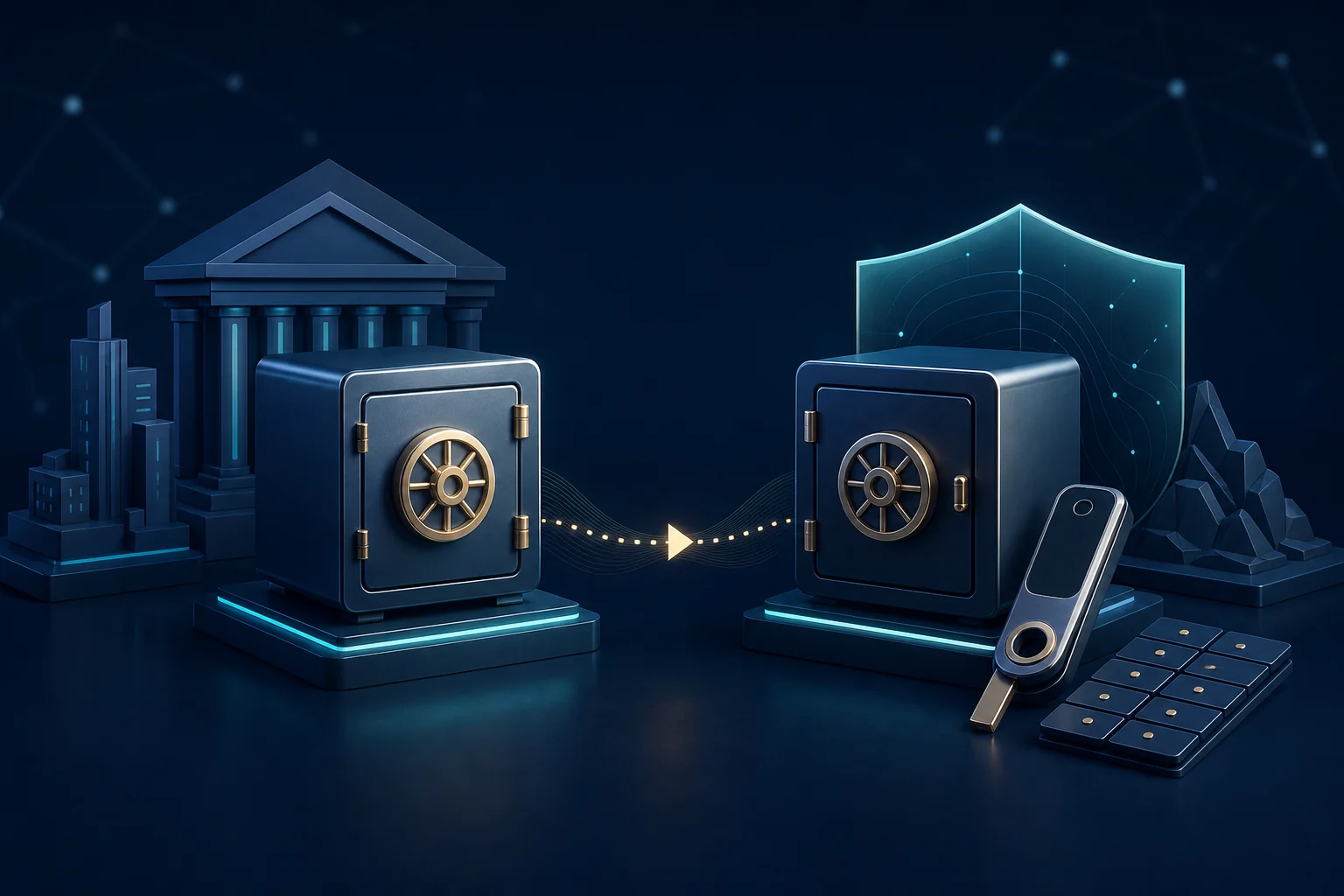
Custodial vs. Self-Custody Wallets
The key difference is not appearance. It is who controls the private keys and who is responsible when access is lost.
Custodial wallets
On a centralized exchange, the platform normally manages keys on your behalf and shows an internal account balance. The experience is familiar, account recovery may be available, and buying and selling is convenient. In return, you depend on the platform's security, withdrawal policy, operations, and compliance status.
Self-custody wallets
A self-custody wallet gives you direct control through a private key or recovery phrase. You do not need an exchange to approve an on-chain transfer, but there is no central support team that can reset a lost phrase. A failed backup, fake site, or malicious approval can cause permanent loss.
Quick comparison
| Question | Custodial | Self-custody |
|---|---|---|
| Who controls keys | Platform | User |
| Lost access | Recovery may be available | A lost phrase is normally unrecoverable |
| Difficulty | Lower | Higher |
| Main risk | Platform and account | Keys, approvals, and user error |
| Common use | Learning and small trades | On-chain use after learning backups |
A beginner decision rule
If you cannot yet explain addresses, networks, private keys, and recovery phrases, learning with a small balance on a reputable platform may reduce operational mistakes. After you understand backups, device security, and test transfers, reassess self-custody. This is not a recommendation to keep everything on an exchange forever; both models create responsibilities.
Self-custody minimums
- Get wallet software or hardware only from an official source.
- Keep the recovery phrase offline; do not screenshot or upload it.
- Never reveal the phrase or private key.
- Confirm the address and amount on the signing device.
- Make a small test transfer first.
- Do not sign an approval you cannot explain.
Custodial minimums
- Give your email and exchange different passwords.
- Enable a passkey or authenticator-based 2FA.
- Review login devices and withdrawal addresses.
- Do not trust an unsolicited support message as proof of identity.
- Keep only the amount required for your purpose.
Official source
Last reviewed: 2026-07-19.
When to reconsider your setup
Your wallet choice can change as your needs change. A small learning balance and a long-term holding may deserve different controls. Reassess custody when the amount grows, when you begin using on-chain applications, or when you can no longer explain your backup and recovery process. Test recovery with an empty wallet before relying on it for meaningful value. For hardware wallets, purchase through a channel you can verify and inspect the setup instructions carefully. For exchange custody, review withdrawal access and account recovery after changing a phone, email address, or security key. Splitting assets across methods can reduce one concentration risk, but it also creates more backups and procedures to manage.